



 Sales:
 Support:
 Contact Us
 Staff & Client Login

 Get A Quote
How To Choose A Construction Site Security Company
Security on a construction site protects more than your equipment and materials, it also protects your project timeline and the people working on and around your site.
Which makes your choice of security provider one of the bigger decisions you’ll make before work starts.
But whether you’re arranging construction site security for a new build or replacing a contract that isn’t working, choosing a construction site security company is rarely simple (nothing ever is).
Proposals tend to look alike and the details separating one provider from another (how patrols are proven, or how quickly an officer actually arrives) aren’t always obvious.
What Your Construction Site Needs From A Security Provider
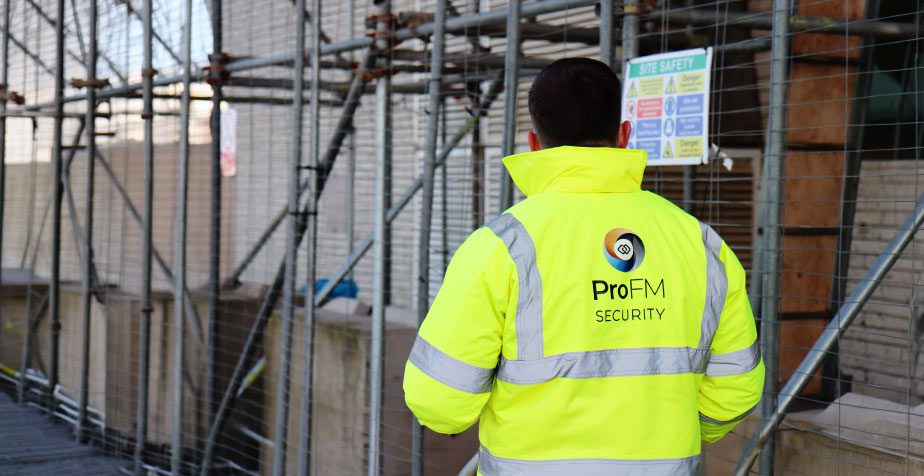
Before you shortlist anyone, understand your site’s risk, its phase and your legal duties, because the right provider needs to fit where you’re at now, but also be ready to adapt so your project does.
It also makes quotes far easier to compare later.
Start with our site itself.
A city-centre build with lots of people walking past your hoarding’s border faces different risks from a remote plot.
Think about what’s stored on site and when (high value equipment and fuel deliveries are the usual concerns) and how many entry points and vehicle access gates you’ll need to control outside working hours.
Then there’s your legal responsibility.
Under the Construction (Design and Management) Regulations 2015 (CDM 2015), the principal contractor – whether that’s you or someone else – manages the construction phase and the Health and Safety Executive (HSE) lists taking steps to prevent unauthorised access to the site among the principal contractor’s duties.
That doesn’t mean every site needs security guards.
But it does mean the security company you appoint becomes part of how you meet that duty, so their scope should fit your construction phase plan.
Our piece on what CDM 2015 says about site security covers the duty in more depth, and the police construction site security guide, developed with the Considerate Constructors Scheme, is a useful guide for the physical measures around it.
Credentials To Check And Verify
Ask for the credentials that apply to construction security work, then check each one through the relevant provider. Most can be checked pretty easily online, or you can just ask to see the credential. Don’t just rely on a website logo.
SIA Licences For Every Officer
Under the Private Security Industry Act 2001, contract officers carrying out licensable work, including security guarding and keyholding, must hold a licence from the Security Industry Authority (SIA).
It’s the only credential that’s a legal requirement, so make sure your potential partner has it for every guard they’ll be sending to your site.
You can check any officer on the SIA register using their 16-digit licence number, and it’s reasonable to ask construction site security guards to show their licence on site.
Our guide to the SIA licence explains the licence types.
Company Approvals And What They Prove
Company approvals are voluntary, but they show a provider is inspected independently and not just making claims unchecked.
The SIA’s Approved Contractor Scheme (ACS) is the main one you can look at.
An ACS-approved security company will appear on the SIA’s register of approved contractors. This area is changing too, because the SIA’s 2026 to 2027 business plan sets out plans to replace ACS with a new Business Approval Scheme, while mandatory business licensing remains a hot political topic.
| Credential | What It Shows | Legal Requirement? | Where To Check |
|---|---|---|---|
| SIA individual licence | The officer is licensed for their specific security role | Yes, for licensable roles | SIA register of licence holders |
| Approved Contractor Scheme | The company meets the SIA’s quality standard for security businesses | No, voluntary | SIA register of approved contractors |
| NSI Gold | The company meets National Security Inspectorate (NSI) technical standards for the services on its certificate, plus its quality system | No, voluntary | NSI Company Finder |
| SafeContractor or Constructionline | Health and safety accreditation (SafeContractor) or construction pre-qualification (Constructionline) | No, voluntary | Ask for the current certificate |
| BS 7858 screening | Staff were screened to the British Standard for people working in secure environments | No, voluntary | Ask how screening is done and recorded |
Patrol Evidence And Reporting
You shouldn’t take patrols on trust. So ask every supplier how their patrols are recorded and what you’ll get after an incident.
We can log patrols electronically (RFID checkpoint tags, GPS-tracked devices or timestamped photos, for example), so you know exactly when our guard turned up, where they went and when they left.
Many other companies keep paper logs, which is fine as long as they can be reliably audited.
You don’t want to end up in a situation where you’re taking someone’s word for it.
It’s also worth asking who watches your site out of hours. We run a National Operations Centre (NOC) that monitors alarm activations remotely so incidents are responded to in real-time and problems with cover can be resolved quickly.
Then ask about incident reporting.
You’ll want to know what a report contains (time, location, what was found and the action taken) and how quickly you’ll get it.
In our experience, a provider that’s confident in its reporting will happily walk you through a real case study.
Response Times And Mobilisation
Get exact numbers for how long it takes an officer to get on your site from the time an alert is triggered (our average response is 30 minutes). Also find out how long it’ll take for a new contract to start.
Mobilisation usually involves a site survey, a risk assessment, inductions for the officers who’ll be deployed and agreeing site access arrangements with your team (keys, codes, gate times etc).
Each step takes time, so if a provider says it can mobilise within hours, ask when the survey and inductions will happen.
It’s also worth asking how they’d handle a phase that starts early or a second site added mid-programme, agreeing the survey date at the same time as the start date so the groundwork doesn’t delay your project.
Matching The Security Service To Your Site
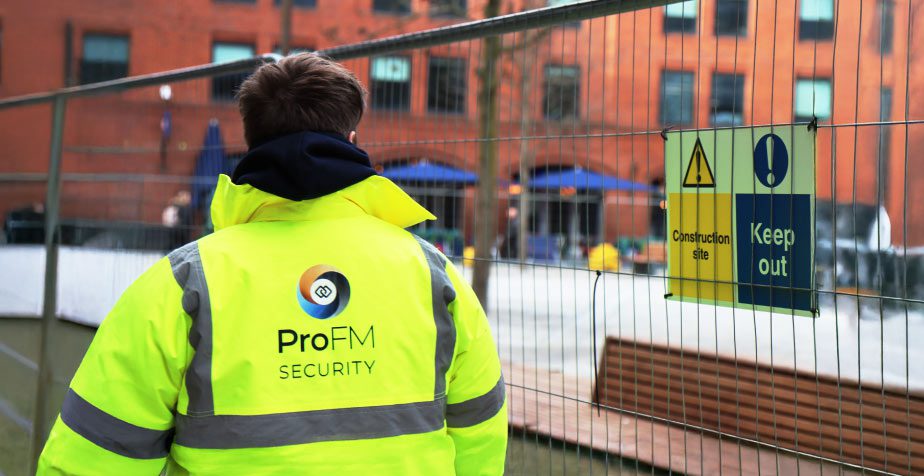
A good security provider will also recommend the least amount of services you need to provide full cover, not just overload you with a catalogue to make money. Things can always be adjusted as your site grows, but this should be planned in phases.
Whether your site needs construction site security guards depends on that risk and phase, and the answer can change within the same programme.
Static guarding suits active builds with a gatehouse to run or where the public is in close proximity.
Mobile patrols, with officers visiting at varied times, can cover quieter periods or multi-site programmes at a lower cost than a full-time presence.
Out of hours, CCTV towers and intruder alarms with remote monitoring can watch a site without anyone stationed there.
Keyholding and alarm response are the budget option where the main risk falls outside working hours.
Most sites benefit from a combination, with guards by day during the main build, technology and patrols at night.
Our comparison of manned guarding or CCTV towers looks at that trade-off in detail.
We’d advise asking every shortlisted provider to explain why their proposed construction site security services suit your site and how they’d adapt it for each next phase.
Contract Terms And Pricing
Compare quotes like for like, making sure your contract can change when your programme does.
One thing we’d say on price.
If one quote is a lot cheaper than the rest, check which services are being left out or, at least, how reliable a service can be when it’s racing to the bottom. That’s not to say the lowest price is automatically the worst service, but you’ll want to know how it can afford to be so low.
Ask whether officers are directly employed or supplied by a subcontractor, since that affects who’s accountable for vetting and conduct. And ask for current insurance certificates.
You’ll know construction projects rarely run exactly to plan.
So check how quickly cover can scale up or down and whether CCTV towers or alarms can be added mid-contract without renegotiating the whole agreement. We’d recommend agreeing in writing how changes are requested and priced before work starts.
Questions To Ask Before You Sign
You can take these questions into any supplier meeting, including one with us.
- Which credentials does your company hold, and where can I verify each one?
- Can I check every officer’s SIA licence before they start on site?
- Are your officers directly employed, or will any be subcontracted?
- How are patrols recorded and verified, and can I see a sample report?
- Who monitors my site out of hours, and from where?
- What’s your average response time for sites like mine, and over what period?
- How long will mobilisation take, and what do you need from my site team?
- Why does your proposed mix of services suit my site, and how would it change at the next phase?
- What’s the notice period, and how quickly can cover scale up or down?
If you’d like these answered for your own site, our team can start with a free site survey.
Professional Construction Site Security From ProFM Group
The right construction site security company is the one that can back up what it claims and can adapt services for every stage of your construction project.
That’s the standard we work to at ProFM Group.
We’re an SIA approved contractor, our officers are screened to BS 7858, and our CCTV monitoring holds NSI Gold approval.
Whether you need static guarding through your main build or cover that changes with each phase, it all starts with a conversation with our experts, who’ll look at your site, your programme and the risks you’re managing before recommending anything.
Get in touch to book your free site survey, or call us on 0808 175 4114
Related Blogs

Emily
Shared Services Director
Emily’s extensive expertise in the field spans over 10 years, and positions her as a thought leader and pioneer for our sector. She discusses key security advice, crucial steps for securing the future, and how our industry is evolving at a breakneck pace.